
You need hot water at home, you buy a system, and that’s it, right?
Not exactly. There’s more to choosing the right hot water cylinder than meets the eye.
Many homeowners end up buying the wrong size, choosing the wrong type, or installing a system that’s not energy-efficient for their needs. These mistakes can cost you a lot of money, both upfront and in the long run.
Let’s break it down step by step. In this guide, we’ll walk you through the most common mistakes people make when buying a hot water cylinder and how you can avoid them.
One of the biggest mistakes people make is choosing a cylinder without thinking about their daily hot water usage.
If your cylinder is too small, you’ll run out of hot water often, especially during busy mornings. But if it’s too big, you’ll waste energy keeping more water hot than you actually need.
Start by counting how many people live in your home and how often you use hot water for showers, laundry, and dishes. For example, a family of four with high usage might need a 250-300 liter cylinder. A single person or couple might be fine with a 135-180 liter one.
Also, think about future needs. Are you planning to add a bathroom or expand your family?
If you’re unsure where to begin, speaking with experts like Hot Water Solutions NZ can help you choose a system that works for you, not just today but for years to come.
There are different types of hot water cylinders: mains pressure, low pressure, vented, unvented, and even solar-compatible options.
Many homeowners assume that all cylinders are the same. That’s not true. Each type has specific benefits and limitations depending on your plumbing setup and home design.
Understanding these differences can save you from a costly mistake. When researching, check out resources like the best hot water cylinder for your Auckland home for tips on different options so you don’t end up installing a system that’s incompatible with your plumbing or lifestyle.
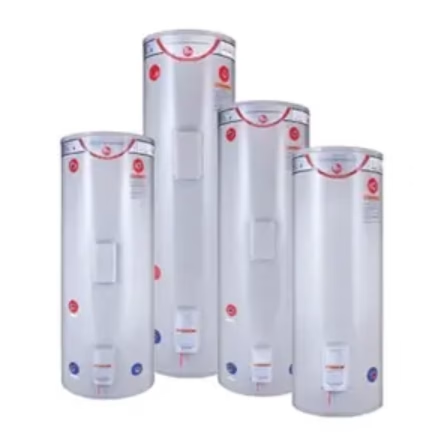
Hot water heating is one of the biggest contributors to your electricity bill. If you pick one that’s not efficient, you could end up spending a lot more on your power bill every year, sometimes hundreds more.
Look for cylinders with proper insulation and energy efficiency ratings. The more efficient the unit, the less heat it will lose, and the less it will cost you to keep your water hot.
An easy way to tell if a unit is energy-efficient? Look for the Energy Star label. That little sticker can save you a lot of money in the long run.
A hot water cylinder is not just a plug-and-play appliance. There are safety, plumbing, and space requirements you need to consider. Choosing a system without thinking about where it will go or how it will be installed can lead to expensive modifications, or worse, failed compliance checks.
Here’s what to keep in mind:
Installing a water heater is not something you should try on your own. It might seem like a good way to save money, but it can actually cause more problems than it solves.
The biggest issue is safety. Water heaters use either gas or electricity, both can be dangerous if you don’t know exactly what you’re doing.
Also, in many places, the law says a licensed professional has to install it.
If you try to do it yourself, you’re more likely to make a mistake. That could lead to leaks, poor performance, or damage that needs fixing later. And if you didn’t have it professionally installed, the warranty might not cover any of it.
Hot water cylinders aren’t something you want to replace every few years. Ideally, your system should last at least 10–15 years or more.
Therefore, you should think long-term. If you’re planning home upgrades or adding new appliances (like a dishwasher or spa bath), it’s smart to choose a system that can handle the load.
Also, think about energy trends. More people are moving toward solar energy and heat pumps. A cylinder that’s solar-compatible or ready for upgrades might cost more now, but it can save you a fortune in the future.
Once you install your hot water cylinder, don’t just forget about it. Like any appliance, it needs a little care to stay efficient and safe.
Simple things like checking the pressure relief valve, replacing the anode rod, inspecting for leaks, or flushing the tank to remove sediment can extend its life.
A little maintenance goes a long way. It keeps your water heater running smoothly and can help it last for years. Check the manufacturer’s guide for how often to service it, and if you're unsure, it's always smart to call in a professional.
Buying a hot water cylinder is a big decision, but it doesn’t have to be a stressful one.
By avoiding these common mistakes, you can choose a system that’s the right size, high quality, and future-proofed for your needs. And always consider how your decision will impact your home not just today, but years from now.
Hot water is something we rely on every day. Make sure your system is one that delivers comfort, efficiency, and peace of mind without costing you more than it should.
🎶 “I can’t feel my face…” but one thing is certain—the ocean breeze at his new Miami estate is going to feel incredible. 🌊✨
The Grammy-winning artist is reportedly under contract for a $54.9M Coral Gables waterfront mansion—an architectural showpiece offering complete privacy, yacht-friendly waters, and resort-style features. Sitting on a rare V-shaped waterfront lot, the property includes a private dock designed to accommodate a massive 200-foot vessel, a stunning pool decorated with coral-inspired mosaics, and expansive bay views that elevate coastal living to another level.
Built only a few years ago, this modern masterpiece has already doubled in value since its $27.8M sale in 2019. With minimalist luxury, breezy open-air design, and spaces crafted for both entertaining and unwinding, it’s easy to see why this incredible residence attracted another high-profile buyer.
This isn’t just real estate—it’s a lifestyle statement.
📍 Coral Gables, Florida
💰 Under Contract (Last Listed at $54.9M)
⚓ Mega-Yacht Dock | 🌊 Waterfront V-Shaped Lot | 🏊 Coral Mosaic Pool
Sold by @onesir @onesirworldwide
#MiamiRealEstate #LuxuryWaterfrontHome #CelebrityLifestyle #CoralGables #MegaMansion #LuxuryLiving #WaterfrontEstate

Step inside a piece of Disney TV nostalgia—this $21M Malibu beachfront estate is the real-world exterior used as Hannah Montana’s legendary home. 🌊✨
The Cape Cod–inspired property is instantly recognizable from the show. While the inside was created on studio sets, the exterior remains one of Malibu’s most famous oceanfront landmarks. Beyond its Hollywood appeal, the home features panoramic water views, seamless indoor–outdoor flow, a private guesthouse, and an outdoor shower perfect for beach living.
Not looking to purchase? The property can also be leased for $60,000 a month or booked for short stays on Airbnb—making it one of Malibu’s most exclusive rental experiences.
Would you want to live in the house that became a Disney icon? 🏡🎬
📍 Malibu, California
7 Beds | 8 Baths | 5,653 Sq. Ft. | 0.74 Acres
#Malibu #LuxuryRealEstate #HannahMontanaHouse #MalibuLiving #BeachfrontHome #CelebrityRealEstate #DreamHomes #MalibuBeachHouse
Sold for $27,750,000 — Barstool Sports founder Dave Portnoy has secured a record-setting waterfront compound in Islamorada, Florida Keys, marking one of the highest residential sales in the area’s history.
Spanning 1.65 acres along pristine shoreline, the 10,228-square-foot estate offers eight bedrooms, 9.5 bathrooms, and resort-level features such as two pools, a private beach, a dock, a boat ramp, and lush tropical grounds. Originally listed at $31.2 million, Portnoy closed the deal with an impressive $3.45 million price reduction.
Completed in 2024, the main residence includes a chef’s kitchen, a wine cellar, and expansive indoor–outdoor living spaces. A separate 2,666-square-foot guesthouse adds three more bedrooms, four bathrooms, and its own private pool.
This sale surpasses Islamorada’s previous record of $22.65 million (2023), highlighting the growing demand for ultra-luxury estates in the Florida Keys.
📍 Islamorada, FL
8 Bed | 10 Bath | 10,228 SQFT | 1.65 Acres
#luxurylifestyle #luxury #luxuryliving #lux #mansions #mansion #mansionsluxury #igmansions #house #money #business #motivation #mindset #inspiration #wealth
This is Kris Jenner’s $20 million Hidden Hills mansion, located immediately next door to Khloé Kardashian’s $17 million home 🤯 Built in 2019 on over an acre and a half, Kris’s estate spans more than 16,000 square feet and features 8 bedrooms and 10 bathrooms of pure California luxury. The property includes a private movie theater, fully equipped gym, office and lounge, guest house, covered outdoor patios, a massive resort-style pool with inset spa, and even an 8-car garage.
Together, Kris and Khloé reportedly spent a combined $37 million building these two homes side-by-side on a secluded 3.4-acre lot with no boundary fences and direct private pathways connecting both houses, creating a true Kardashian family compound. Kris’s interiors reflect her signature warm neutral palette with custom marble throughout, a massive chef’s kitchen, and floor-to-ceiling windows overlooking the backyard. They’re also just a short drive from Kylie Jenner and Kim Kardashian’s homes, keeping the entire family close.
Would you live here, and do you want a full tour of Khloé’s side of the compound next? 👀✨
#krisjenner #khloekardashian #kardashians #celebrityhomes #hiddenhills #luxuryrealestate #mansion #realestate #luxurylifestyle #architecture #californialiving #reels #instareels #viralreels #explore #ᴇxᴘʟᴏʀᴇᴘᴀɢᴇ


